Showing posts with label Urbanism. Show all posts

Apr 7, 2009

Historical Precedent: Regrettably Overlooked

Architectural thought has continuously evolved alongside human evolution. The passing of time has proven that architecture reacts innately with contemporary social issues as well. Technological advancements, population expansion, and the need for sustainable living have all proven to be direct components of architectural design. Accordingly, with so much debate being centered around the need for environmental awareness, our generation is beginning to be incessantly focused on possibilities for the future. With theoretical design projects preparing for our future’s eco-meltdowns, and award winning websites predicting population impact in twenty years’ time, upcoming events are contacting our lives before they necessarily have to. I am not an opponent of preparatory action and forward thinking global attentiveness. I recognize and applaud the overwhelming growth in popularity of the “global accountability” movement. However, I feel as though the most crucial tool in predicting fated circumstances is lacking in today’s train of thought; historical precedent. With that being said, I decided to scour the blogosphere this week for posts that offer a glimpse to past urban/architectural trends and their possible relevance to society’s future qualms. I analyzed a post on Brand Avenue entitled Edifice Complex which discusses the Sears Tower as an example of the problems associated with labeling a piece of architecture an icon. I also investigated a post on BLDGBLOG entitled The Lost Airfields of Greater Los Angeles which mentions multiple private airstrips that existed within Los Angeles and their possible foreshadowing of the city’s current transportation burdens. My reflections and additions can be found at their respective websites as well as below.

“Edifice Complex”
Comment

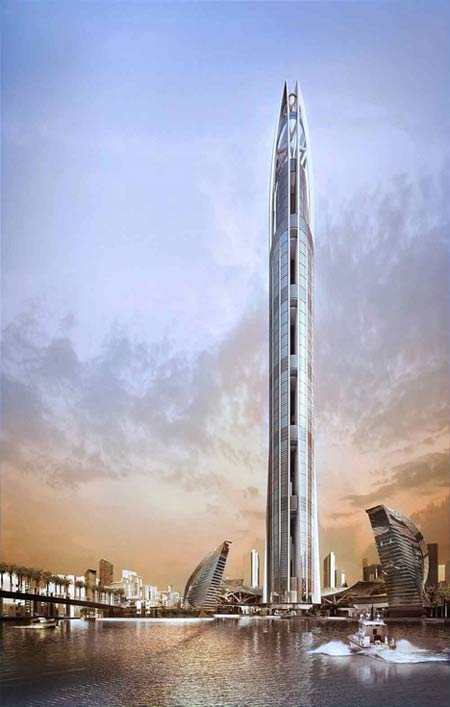
What is most intriguing about your post is the notion that Chicago natives are concerned by the possibility of their most significant cultural icon losing its symbolism. It would be interesting to do a polling of Chicago citizens to determine whether they feel the name change (Sears Tower to Willis Tower) or the updated paint job is the driving factor of concern. It is fascinating to consider how large of an emotional impact the changing of a few letters or a different hue of paint could have on an entire culture’s perception of a building. Is it really the paint or name change that is causing the stir? Could it just be an excuse for public outcry that Chicago’s once monumental structure simply isn’t special anymore? After all, the Sears Tower has somehow managed to transform itself from the tallest building in the world to the now minor blip on skyscraper radar. This idea brings forth another interesting debate that would begin to question the evolving nature and symbolism of buildings post completion. How can a building like the Sears Tower keep its iconic labeling while the very reason that it is in fact iconic is being dismissed by much taller skyscrapers like the Nakheel Tower or the Burj Dubai? Maybe what this discussion is really challenging are the qualifications for classification as architecturally iconic. I believe it is impossible to be labeled an icon when your only unique condition is something as vulnerable as height. Categorizing a building like the Sears Tower (or any skyscraper) as an icon is putting unfair pressure on a building to perform beyond reasonable expectations. Chicago natives aren’t disgruntled about the name change or the paint job that their building is going to receive. They are upset at the realization that their icon never was an icon and therefore can be renamed and painted. You don’t see the Acropolis being outfitted with light reflecting paint or the Taj Mahal being renamed the Taj KingFisher. Likewise, the Greeks and Indians don’t fear losing their architectural icons while the Chicagoans do.

“The Lost Airfields of Greater Los Angeles”
Comment

While reading your post, the thought that was constantly fluttering through my mind was how the major developers of Los Angeles were not able to pick up on the fact that even in the 1920’s, people were challenging the spatial dimensions of L.A.’s sprawling landscape. Even with minimal technology and ultimately no urban achievement, the fact that a relevant form of transportation was aviation is astounding. Granted, Los Angeles in the 1920’s mostly consisted of farming land and had very few major roads. However, the fact that airstrips were owned by private individuals and were commonly used in areas where shopping malls now reside speaks wonders for where we went wrong. What possessed us to expand so foolishly? And possibly even more importantly, how was it achievable for there for to be a plethora of airstrips in activity at one given moment in Los Angeles in the 1920’s? I doubt there were air traffic controllers regulating Howard Hughes’ hourly take offs and arrivals making sure he never collided with Charlie Chaplin. The existence and achievements of the airstrips brings light to a time in Los Angeles’ history when anything was possible, when the sky was in fact not the limit, and when daily life was not limited by urban planners’ inefficiencies but rather dictated by practicality. But when practical means of transportation revolve around getting airborne to travel ten to fifteen miles, the urban fabric of a city must begin to be questioned in order to preserve the ingenuity and very uniqueness of the city itself. What William Mulholland was able to imagine and implement for the city of L.A. is comparable to what needed to be done with the other facets of the city. His roads were able to deliver water from hundreds of miles away to all of corners of L.A., why couldn’t anyone else manage to figure out how to get people from Downtown to Santa Monica in under an hour?

Mar 9, 2009

Subterranean Developments: Outdated Technology Yields Revolutionary Thought

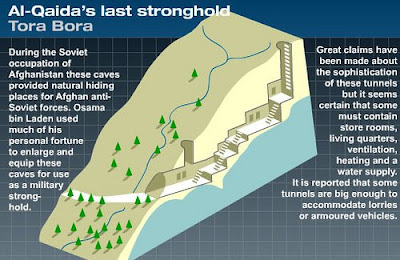
Architecture has always been an evolutionary field operating within multiple dimensions and growing symbiotically with technology and the rapid pace of human evolution. The most primitive urbanist thinking began as two-dimensional reactionary expansion to geological terrain. Dwelling within the realm of verticality was only presented at times of crevices and ditches already existing within the earth’s natural form. With the passing of time, minor technological advancements began to pave the way for human occupation along the z-axis. Today, our opportunities for urban evolution in the third dimension are virtually limitless. Hundred story buildings such as the Nakheel Tower and the Burj Dubai have demolished once existing spatial barriers and reinvented the way humans can occupy earth. While most contemporary architectural trends have been primarily focused in vertical expansion, I am choosing to focus my blog entry this week on the possibilities for urban advancements within the subterranean realm. In my search for precedents offering innovative concepts for underground dwelling, I found that the most intriguing and inventive ideas were coming from some of the most ancient and outdated forms of architecture. I examined a post by Bryan Finoki entitled "Snake Tunnels in Taliban Territory" in which the organization’s intricate system of cave dwellings have been examples of urban-engineering marvels existing within one of the most treacherous mountain landscapes on earth. Furthermore, the U.S. Army’s failure to eradicate the tunnel systems is a reminder that indigenous knowledge is often times superior to technological advancements. I also examined a post by John from A Daily Dose of Architecture entitled "New Wave Bunkers" which analyzes three new architectural projects that rethink the way ideological principles of underground military bunkers are being adapted today. My reactions to these posts can be found below as well as on their respective blogs.

“Snake Tunnels in Taliban Territory”
Comment

My initial response to this post comes in the form of the irony associated with the world's most technologically advanced military force struggling to cope with the alliance that has formed between a primitive guerrilla military troop and landscape. I do not know which is a more crowning achievement, America developing the technology to create bunker-busting missiles that can be fired and controlled with pinpoint precision, or the Taliban rendering the technology useless through inhabiting their landscape? I find it intriguing how the international fight between capitalism and terrorism has, in Afghanistan, been reduced to a duel between technology and sustainability. It was not tear gas, bombs, armed assault, or food deprivation that forced John Walker Lindh and others to flee from an underground stronghold. Thousands of gallons of water had to be pumped into the caves to have the men flooded out. Nevertheless, the parts of this post that I would like to dig deeper into are the architectural implications affiliated with underground tunnels combating modern technology. What were the basic architectural principles that Attila the Hun followed in his early establishment of mountain caves? More importantly, why were these principles of environmental habitat lost or misunderstood in Western societies’ advancements? In regards to architectural evolution, the caves offer insight on the complex meaning of interior dwelling. Architects have always dealt with spatial projects in terms of interior versus exterior. But what can we architects make of a community existing purely at an interior level? Not only are the Taliban fighters challenging Western democratic thought, but apparently they are now angry at Western architectural principles as well. In the upcoming quest for sustainable development strategies, it is essential for innovative thinkers to consider the obvious advantages to subterranean climates that have been found in Afghanistan.

“New Wave Bunkers”
Comment

I find this post especially pertinent in regards to the dynamic characteristics of each type of bunker you describe. The first question I have considers which architectural elements of the original Federal Reserve Communications and Records Center were preserved in the customization that exists today. While I applaud the architect’s willingness to revise an outdated architectural form, I have to scrutinize whether or not this design is technically classified as a full refurbishing rather than an adaptive reuse. The recyclable qualities that are inherently associated with adaptive re-use are not commonly affiliated with recondition. I imagine that the construction elements that make a “nuke proof” bunker actually nuke proof would be extremely large in size and not easily capable of resuscitation. Also, what qualities of the Reserve bunker’s structural pieces are in any way applicable to the programmatic needs of a library? At first glance, the Svalbard Global Seed Vault (see image at right) looks like an unbelievable project. Its simple diagrammatic form is clearly correlated to the function of the system. As the design of the structure is clearly magnificent, I have to scrutinize the practical relevance of a building like this. As you mention yourself, in the even of a global meltdown or catastrophic geothermal collapse, what good is a giant population of plant seedlings going to do? In other words, while the architecture of the vault is effective in its protective qualities, beautiful design, and responsiveness to its surroundings, it is important to question whether the building needs to exist in the first place. An architect is obviously not going to pass up a job opportunity, but it is part of the architect’s role to question the intentions of a job and bring the most out of an assignment. Encompassed in that mindset is the rudimentary architectural understanding that the most critical aspect of any design problem is function. Le Corbusier famously noted, "To create architecture is to put in order. Put what in order? Function of objects".

Regarding the Capital Visitor’s Center, I have to wonder whether the underlying reason for subterranean construction is safety related. After looking at the images, I can not imagine the addition providing too much protection from terrorist attack. I see the design choice having more to do with appropriating programmatic elements in relevant spaces without disrupting the function of the adjacent Capital Building. As stated in your post, the reason to construct below ground might have to do with the architect not wanting his building to compete with the primary structure. This is obviously the case. The visitor’s center to the Capital Building is just that, the visitor’s center. Any attempt to contend architecturally, spatially, or figuratively was never an option.

Mar 2, 2009

New Urban Strategies: Changes for the Future

As I have a lightly touched upon in previous blog entries, the urban growth of global cities is a contemporary issue that is affecting the lives of every world citizen. The dense metropolitan city of Delhi is similar to a quiet suburb in Iowa in regards to its urban landscape impacting the lives of its inhabitants on a daily basis. Whether it is a subway route dictating a residents’ daily commute time, or city officials regulating residential building heights, the inhabitant of a city is the powerless victim of municipal circumstances. Here in Los Angeles, we know all too well the pitfalls of living in a city with such lack of consideration given to successful urban strategy. In 1967, Le Corbusier (arguably the most famous of all modern architects and urban strategists) mocked American cities when saying, “I shall live 30 miles from my office in one direction, under a pine tree; my secretary will live 30 miles away from it too, in the other direction, under another pine tree. We shall both have our own car. We shall use up tires, wear out road surfaces and gears, consume oil and gasoline. All of which will necessitate a great deal of work ... enough for all”. While Le Corbusier was able to diagnose the problem with American cities back in 1967, it took the rest of us a slightly longer time to question the illogical nature our cities. Due to the fragility of the world economic state coupled with increased environmental awareness, emphasis is finally beginning to be placed on efficient and responsible urban development. With that in mind, I decided to focus this week on current issues regarding three of the most important areas to consider when aspiring for successful urban growth: management of impoverished communities, public transportation, and green living.

Currently in Rio De Janeiro, Brazil, scrutiny is finally beginning to arise regarding the country’s decade long strategy towards impoverished communities. Compared to the likes of infamously indigent cities such as Johannesburg, Buenos Aires, and Mexico City, Rio’s stance towards management of poor communities is comparable to an urban-apartheid. Lacking an agenda revolving around social enrichment, the government’s hyper-disintegrated strategy towards urban rehabilitation has consisted of mass segregation and quarantining of poor communities. Existing within Rio is the slum of Dona Marta. Regarded as the most poverty stricken, and crime ridden neighborhoods in all of Brazil, the government has taken an even more drastic policy towards containment of this 7,500 person community. The project (which is already undergoing construction) involves the erection of a 650-meter long by 1-meter tall concrete wall encircling the entire neighborhood. This impoverished island prison will then be under constant supervision of the Brazilian military. State officials say that there are two main goals that will be reached through the implementation of this plan. One being that construction of the wall will prevent squatters from occupying an eco-preserve on the outskirts of the neighborhood. The second purpose is that a constant military watch will supposedly deter drug trafficking in and around the neighborhood. If people are squatting on hillsides because they have no place to live, why not implement a public work project to help construct affordable housing? If there is too much allure to pursue a career in drug trafficking, why not create a legitimate program that could create realistic job opportunities? In constructing a massive barrier around an insolvent community, the Brazilian government is simply digging itself into a deeper socio-economic hole. Their action is not ensuring Dona Marta (or any neighboring community) any long-term good and it is merely another act of abandonment that will lead to no civic revival.

Another example of a fatally flawed strategy for urban strategy can be found in Beijing, China. Avoiding Beijing’s obvious industrial waste and community housing issues, the biggest problem that Beijing faces today is its lack of sufficient public transportation. The urban layout of the city was originally established in a manner that is not suitable for the size of city that Beijing has become. The center of the problem can be linked back to Beijing’s execution of a ring road street system. The ring road system for urban planning involves the implementation of main street systems traveling in a circle around the center of the city. Smaller sub-streets branch off from the main circular roads in a traditional grid form. The idea behind the system is that as the city expands, more and more ring roads will be constructed outwards. There are currently six ring roads existing in China with plans for at least two more being constructed within the next ten years. The problem with the ring road system is that as a city expands, a true center of a city begins to disappear and natural fragmentation occurs. So while the street system was originally aligned with the notion that there is a true centralized point of the city, the reality of the matter is that there is no center anymore. The very existence of the ring roads themselves contradicts the very idea of efficient public transportation. While most forms of public transportation are operating around the inefficient ring road routes, most people opt for private vehicles or taxi cabs that are able to operate on minor streets. This causes a ridiculous amount of traffic, as well as an overwhelming amount of excess air, noise, and visual pollution. So far in 2009, there have been a recorded 1466 new private car registrations every day in Beijing. While the Chinese government is already in the process of constructing an expansive underground subway line to counter the ring roads, more action needs to be taken to implement multiple strategies. Projects that are effective at multiple scales and that can impact the nearly 17-million people that inhabit the city are essential to urban success. There needs to be projects that complement Beijing’s massive subway plan. Plans like rerouting already inefficient bus lines to necessary areas. Or public policy changes such as city expansion restrictions. Without integrating multiple public transportation projects to Beijing, the city will never be able to effectively support it’s ever increasing population.

In regards to the pursuit for efficient green dwelling, I will take a more creative approach through the analysis of a recent art sculpture created by Dutch artist Pim Palsgraaf. In his recent sculpture entitled “multiscape”, Palsgraaf proposes the theoretical idea of a sustainable city that is resting upon the back of a chicken. The artist’s idea of a transportable, famine avoiding city that has constant access to food (eggs) is a playful look at the idea of a self-sustaining city. When contemplating a city resting on a chicken what immediately crosses my mind is not the absurdity of practical application of this idea, but rather the debate that would arise if the chicken-city were to be real. The question that I pose that links the multiscape to our urban discussion is how long is it going to take for the inhabitants of the city to become tired of eating eggs and kill their home to eat its meat? Only when pondering this question does the realization that the city on the chicken already exists, and we have been slowly eating away at its breasts and thighs for years.

Feb 23, 2009

Green Solutions: What Equation Are We Really Solving?

With consideration being given to contemporary global issues, the architecture industry is focusing its aim evermore precisely on advancements in green technologies / industries. Revolutionary design teams throughout the world are thinking up innovative and environmentally-conscious constructions that are pushing the boundary of what we once thought were the capabilities of our “green initiative”. Morris Architects, an architecture firm based in Houston, Texas recently proposed an arousing renovation project that could turn an approximate 4,000 out of commission oil rigs in the Gulf of Mexico into eco-resorts. At a slightly smaller scale, the New Hampshire based design team Bensonwood just displayed their design for a low cost, zero-energy prefabricated home available for purchase in upcoming months. The home, which was awarded LEED Platinum Status (U.S. Green Building Council's highest rating for green building construction) is available for installation for approximately $300,000. While revolutionary thinkers in the design industry are doing their part to expand upon green initiatives, I decided to explore the blogosphere in search relevant political and urban planning related issues. I examined a post by Brian Merchant entitled California’s New Budget Delays Regulation of Deadly Diesel Pollution on the TreeHugger.com blog. In the post, Merchant brings forth the ecological shortcomings of California’s new budget. In addition, I observed a post by Clark Williams-Derry entitled Cities Greener than Suburbs from the WorldChanging.com blog. Williams-Derry’s post analyzes a recent study which deduced that living in a dense urban environment creates a smaller carbon footprint than living in the suburbs. My insight and analysis to these two articles can be found below and on their particular websites.

“California Budget Delays Regulation of Deadly Diesel Pollution”
Comment

Being a resident of California my entire life, I too am concerned for the condition of the state as a whole. I appreciate your diligent analysis of the irresponsibility’s of the state legislature in passing the new budget with its lack of green initiative. While I can recognize the serious ramifications of passing the budget with the absence of ecological reform, I think it is also important to consider how grave the California financial crisis is as a whole. The California unemployment rate is almost at 10%, the state’s total debt ($42 billion) rivals that of many developed countries, and the darkest clouds of the recession are still to come. With no end in sight, it is a top priority to have a budget laid out and initiated as quickly as possible, even if that means that some obvious issues are negated. I can appreciate you mentioning the serious health factors at stake, but you might be expecting a slight bit too much from California. It is quite the feat to have our state’s most important budget proposal thought up, written out, passed in legislature, and executed. Arguably the toughest of those processes is going through the legislative process. I’m sure it is safe to assume that careful consideration was given to the grueling nature of the process while the budget was being drafted. You mentioned yourself, “…months of ugly stalemate” were the cause of the premature nature of the budget proposal.

While I recognize the importance of a speedy budget proposal, I do agree with you in that there are many environmental issues being neglected in the package. In addition to the diesel fuel crisis, the budget approval will also be lifting many already existing environmental hurdles in order to speed up the permit process for 10 major road construction projects. While I’m sure this is successful in stimulating the state economy, this is certainly one of the evident slaps in the face to all green thinkers. The state budget also plans to exempt many crucial environmental regulations in the hopes of creating a more efficient excess state property sale process. It would be safe to assume that there are probably hundreds of other social groups with legitimate concerns and complaints about the budget plan. It is unfair to place the environmental agenda above any others’. When analyzing the legitimacy of the budget proposal, it is important to consider the first priority of the state budget proposal… to financially stabilize the state.

“Cities Greener than Suburbs”
Comment

I find it interesting how it was only 20 years ago that the notion of moving to the suburbs was deemed the most socially accepted / conscious choice an American young professional could make. It’s exciting to watch as writers like yourself are beginning to note the obvious inconveniences and general incompetence associated with the suburban American lifestyle. It’s encouraging to hear intelligent factual analysis begin to be incorporated in discussion of the fallacies of suburban neighborhoods. As a designer, the notion of a makeshift community evolving arbitrarily 30 miles away from all relevant forms of life is innately flawed. I am glad to hear the scientific community contribute to the hopeful demise of the suburban routine. I think it is going to be extremely thrilling to watch as environmental concerns begin to play a greater factor in determining urban sprawl than out of date social norms.

While I agree that city suburbs’ mistreatment of transportation and clean electricity supplies contribute heavily to hazardous C02 emissions, I think that the fundamental ideologies that are existent within our societies are more of a concern than individual urban strategies. I live in an extremely urban neighborhood in Los Angeles, a neighborhood where people drive to the supermarket that is five walking minutes away from their home. As much as I would love to imagine it, I don’t ever imagine myself using any form of transportation other than my car to reach the supermarket. This is partly due to the environment I live in, but it is mostly due to the fact that I am a product of the American lifestyle that hasn’t placed enough of an emphasis on efficiency and global responsibility in our day to day lives. I would blame this on a (general) lack of eco-initiative coming from Washington and state departments. It is only now that environmental concerns are beginning to impact the way government policy is formed. Only through actions like the current California State budget proposal’s 12% gasoline tax will people begin to realize and question the inefficiencies that exist in their lives.
 
Creative Commons License
This work is licensed under a Creative Commons Attribution-Noncommercial-No Derivative Works 3.0 United States License.