Architectural thought has continuously evolved alongside human evolution. The passing of time has proven that architecture reacts innately with contemporary social issues as well. Technological advancements, population expansion, and the need for sustainable living have all proven to be direct components of architectural design. Accordingly, with so much debate being centered around the need for environmental awareness, our generation is beginning to be incessantly focused on possibilities for the future. With theoretical design projects preparing for our future’s eco-meltdowns, and award winning websites predicting population impact in twenty years’ time, upcoming events are contacting our lives before they necessarily have to. I am not an opponent of preparatory action and forward thinking global attentiveness. I recognize and applaud the overwhelming growth in popularity of the “global accountability” movement. However, I feel as though the most crucial tool in predicting fated circumstances is lacking in today’s train of thought; historical precedent. With that being said, I decided to scour the blogosphere this week for posts that offer a glimpse to past urban/architectural trends and their possible relevance to society’s future qualms. I analyzed a post on Brand Avenue entitled Edifice Complex which discusses the Sears Tower as an example of the problems associated with labeling a piece of architecture an icon. I also investigated a post on BLDGBLOG entitled The Lost Airfields of Greater Los Angeles which mentions multiple private airstrips that existed within Los Angeles and their possible foreshadowing of the city’s current transportation burdens. My reflections and additions can be found at their respective websites as well as below.
“Edifice Complex”
Comment
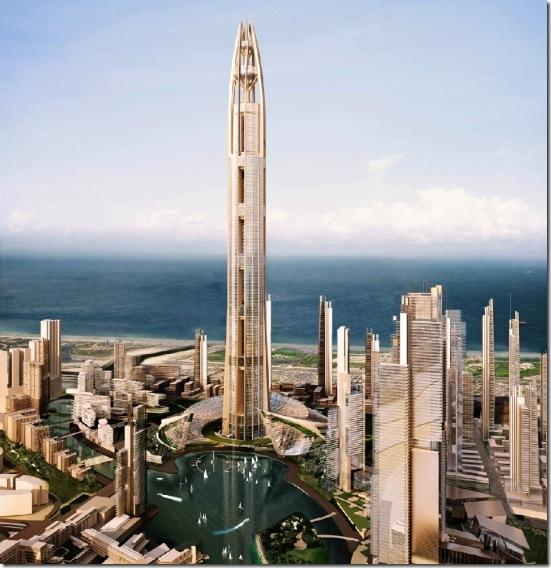
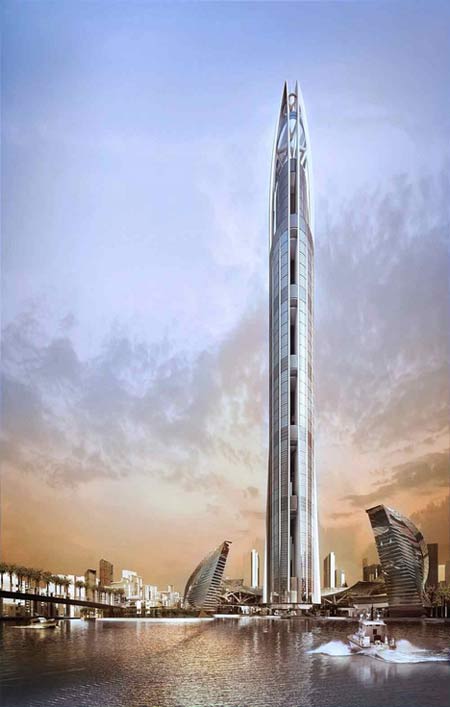
What is most intriguing about your post is the notion that Chicago natives are concerned by the possibility of their most significant cultural icon losing its symbolism. It would be interesting to do a polling of Chicago citizens to determine whether they feel the name change (Sears Tower to Willis Tower) or the updated paint job is the driving factor of concern. It is fascinating to consider how large of an emotional impact the changing of a few letters or a different hue of paint could have on an entire culture’s perception of a building. Is it really the paint or name change that is causing the stir? Could it just be an excuse for public outcry that Chicago’s once monumental structure simply isn’t special anymore? After all, the Sears Tower has somehow managed to transform itself from the tallest building in the world to the now minor blip on skyscraper radar. This idea brings forth another interesting debate that would begin to question the evolving nature and symbolism of buildings post completion. How can a building like the Sears Tower keep its iconic labeling while the very reason that it is in fact iconic is being dismissed by much taller skyscrapers like the Nakheel Tower or the Burj Dubai? Maybe what this discussion is really challenging are the qualifications for classification as architecturally iconic. I believe it is impossible to be labeled an icon when your only unique condition is something as vulnerable as height. Categorizing a building like the Sears Tower (or any skyscraper) as an icon is putting unfair pressure on a building to perform beyond reasonable expectations. Chicago natives aren’t disgruntled about the name change or the paint job that their building is going to receive. They are upset at the realization that their icon never was an icon and therefore can be renamed and painted. You don’t see the Acropolis being outfitted with light reflecting paint or the Taj Mahal being renamed the Taj KingFisher. Likewise, the Greeks and Indians don’t fear losing their architectural icons while the Chicagoans do.
“The Lost Airfields of Greater Los Angeles”
Comment
 While reading your post, the thought that was constantly fluttering through my mind was how the major developers of Los Angeles were not able to pick up on the fact that even in the 1920’s, people were challenging the spatial dimensions of L.A.’s sprawling landscape. Even with minimal technology and ultimately no urban achievement, the fact that a relevant form of transportation was aviation is astounding. Granted, Los Angeles in the 1920’s mostly consisted of farming land and had very few major roads. However, the fact that airstrips were owned by private individuals and were commonly used in areas where shopping malls now reside speaks wonders for where we went wrong. What possessed us to expand so foolishly? And possibly even more importantly, how was it achievable for there for to be a plethora of airstrips in activity at one given moment in Los Angeles in the 1920’s? I doubt there were air traffic controllers regulating Howard Hughes’ hourly take offs and arrivals making sure he never collided with Charlie Chaplin. The existence and achievements of the airstrips brings light to a time in Los Angeles’ history when anything was possible, when the sky was in fact not the limit, and when daily life was not limited by urban planners’ inefficiencies but rather dictated by practicality. But when practical means of transportation revolve around getting airborne to travel ten to fifteen miles, the urban fabric of a city must begin to be questioned in order to preserve the ingenuity and very uniqueness of the city itself. What William Mulholland was able to imagine and implement for the city of L.A. is comparable to what needed to be done with the other facets of the city. His roads were able to deliver water from hundreds of miles away to all of corners of L.A., why couldn’t anyone else manage to figure out how to get people from Downtown to Santa Monica in under an hour?